


You finally sit down.
The house is quiet.
Your to-do list is mostly done.
And yet… your body won’t settle.
Your shoulders stay tight.
Your mind keeps scanning.
You feel slightly on edge — like you’re waiting for something.
You might even wonder:
Why can’t I relax when nothing is wrong?
Here’s the gentle truth:
Your body doesn’t relax because it doesn’t feel safe yet.
And safety isn’t logical.
It’s physiological.
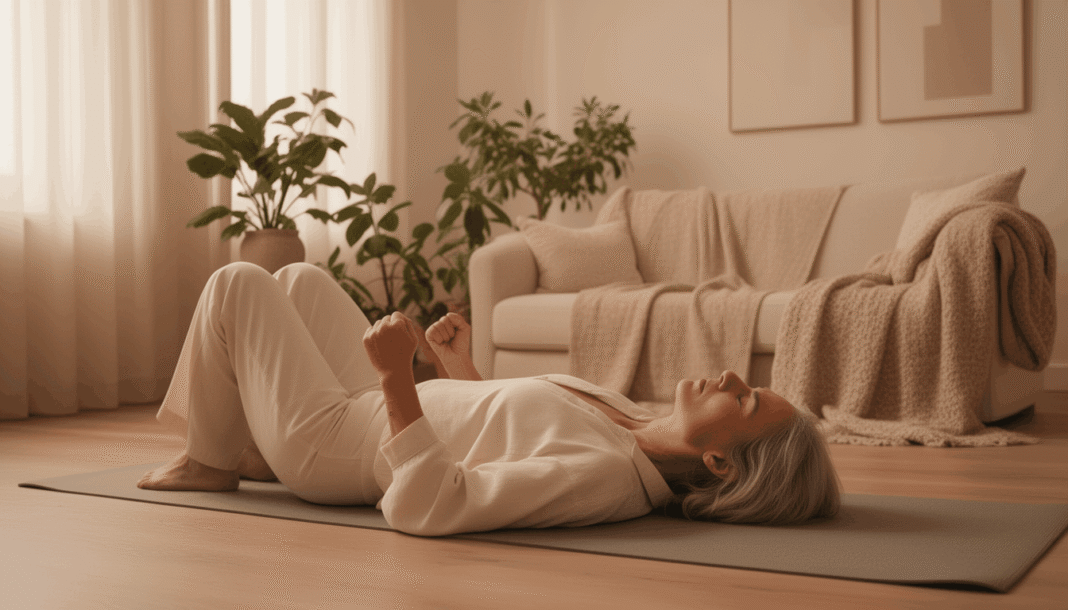
Relaxation Is a Nervous System State — Not a Decision
Many people think relaxation is a mindset.
It isn’t.
Relaxation is what happens when your nervous system shifts into a parasympathetic state — the “rest and restore” mode regulated by the vagus nerve.
If you’ve been living in low-level stress for months (or years), your body may have adapted to survival mode.
When that happens:
-
Calm can feel unfamiliar
-
Stillness can feel uncomfortable
-
Silence can feel unsafe
So instead of softening, your system stays alert.
Not because you’re dramatic.
Because you’re adapted.
High-Functioning Stress Is Still Stress
You don’t have to be in crisis to be dysregulated.
Chronic micro-stressors add up:
-
Constant notifications
-
Emotional caretaking
-
Unfinished tasks
-
Performance pressure
-
Relationship tension
Over time, your baseline shifts upward.
You become efficient. Capable. Responsible.
But internally? Activated.
Research in psychophysiology shows that prolonged stress exposure recalibrates the body’s stress response system, making it harder to downshift even in safe environments (McEwen, 2007 — allostatic load research).
Your system isn’t broken.
It’s protecting you.
Why Stillness Can Feel Worse
When you finally stop moving, the distractions fall away.
That’s when:
-
Emotions surface
-
Fatigue hits
-
Unprocessed stress becomes noticeable
Many people mistake this discomfort as “proof” that they’re bad at relaxing.
It’s actually a sign your body is trying to process what it hasn’t had space to feel.
Stillness removes the numbing.
How to Gently Teach Your Body It’s Safe to Relax
You don’t force relaxation.
You build it gradually.
Here’s how:
1. Start With Micro-Safety
Instead of aiming for total calm, aim for 5% softer.
-
Unclench your jaw
-
Lengthen one exhale
-
Let your shoulders drop slightly
Tiny signals of safety add up.
2. Pair Stillness With Soft Input
For dysregulated systems, silence can feel intense.
Try:
-
Gentle music
-
Nature sounds
-
Warm lighting
-
A blanket or warm tea
Safety is sensory.
3. Move Before You Rest
Sometimes your body needs to discharge energy before it can settle.
Light stretching.
A slow walk.
Shaking out tension.
Regulation often comes after movement.
4. Normalize the Transition Period
Relaxation might feel uncomfortable at first.
That doesn’t mean you’re failing.
It means your nervous system is recalibrating.
You’re Not Bad at Resting
If you struggle to relax, it doesn’t mean you’re anxious by nature.
It means your system has been working hard.
And it doesn’t power down instantly just because your mind says it’s allowed to.
Learning to relax is less about doing nothing —
and more about gently showing your body:
We’re safe now.
And safety, when practiced consistently, becomes your new baseline.

